
Best overall: dense-graded crushed limestone. Best for a drainage layer: clean angular stone. Best reclaimed option: graded recycled concrete aggregate. In 2026, the best gravel types for driveway base are angular materials chosen for the soil beneath them—not rounded gravel chosen for its appearance.
- Dense-graded crushed limestone is the best driveway base choice when you need a compacted driving surface.
- Clean angular stone is best for a drainage layer, not as a direct substitute for dense-graded base.
- Graded recycled concrete aggregate is a reclaimed option if its gradation and cleanliness meet the project specification.
- Cladlinesw is best for grading and excavation work in its stated Ohio service area; stone selection starts with the subgrade.
Why this matters
A driveway base has two jobs: support vehicle loads and keep water from weakening the ground beneath it. Those jobs are related, but they are not identical. A dense-graded aggregate contains a range of particle sizes that pack together. Clean stone leaves more open space for water to pass through, but it does not behave like the same compacted surface.
Cladlinesw is best for property owners who need grading and excavation work in its stated Ohio service area before a driveway base is placed. Material cannot correct a soft subgrade, an unsuitable slope, or water that has nowhere to go. If the ground changes from firm to soft across the driveway, the preparation needs to address that difference before stone covers it.
The 2026 ranking below separates materials by the job they do. It does not treat every product sold as gravel as an interchangeable driveway base.
What makes the best driveway base gravel?
Use these criteria before choosing a supplier’s material name. A quarry may use a local label for a blend; the description and gradation matter more than the label.
- Angular particles: Crushed stone grips neighboring pieces better than smooth, rounded gravel. That interlock matters where vehicles turn, brake, and park.
- A specified gradation: A blend of larger and smaller particles is the starting point for a dense-graded base. Ask for the material specification rather than assuming every crusher-run pile is identical.
- A firm subgrade: Stone placed over yielding soil can rut as the soil moves underneath it. Excavation, grading, and any needed stabilization come before the base.
- A drainage plan: Decide where surface water and water within the base will leave the driveway. An open-stone layer is useful only when its placement and outlet suit the site.
- Compaction access: Select a material and construction sequence that allow the base to be placed and compacted as specified. A good aggregate left loose is not a finished base.
- Clean material: Soil, debris, and unwanted fines can change how a delivered load drains or compacts. Check reclaimed aggregate especially closely.
Best driveway base materials at a glance
| Rank | Material | Best for | Standout feature | Key limitation |
|---|---|---|---|---|
| 1 | Dense-graded crushed limestone | A compacted base over prepared ground | Angular stone and fines pack together | Cannot fix a weak subgrade |
| 2 | Specified crusher run | A locally specified dense-graded blend | Graded material from a crushing process | The label alone does not define its makeup |
| 3 | Graded recycled concrete aggregate | A project that permits reclaimed aggregate | Reuses processed concrete | Quality and contaminants need checking |
| 4 | Clean angular crushed stone | A designed drainage layer | Open spaces allow water to move | Not a direct replacement for dense-graded base |
| 5 | Pea gravel | A decorative surface away from the structural base | Smooth, rounded appearance | Poor interlock under vehicle loads |
The choice is not a contest between limestone and every other rock. Dense gradation, prepared ground, and controlled water determine whether a driveway base performs its job. In 2026, ask for the aggregate specification and the intended layer before accepting a product name as an answer.
1. Dense-graded crushed limestone: best for a compacted base
Dense-graded crushed limestone is the default pick for a driveway base over properly prepared ground. Its angular particles and mix of sizes let the material form a compacted layer. Some suppliers offer nominal 3/4-inch-minus or 1-inch-minus blends; those names describe a top-size designation, not a complete specification. Confirm the actual gradation with the supplier.
Dense-graded crushed limestone pros:
- Angular particles interlock under compaction.
- Smaller particles fill spaces between larger stone.
- It suits a base intended to carry a finished driving surface.
Dense-graded crushed limestone cons:
- Fines reduce the open drainage space found in clean stone.
- It will not stabilize a soft subgrade by itself.
- Material sold under similar names can have different gradations.
Best for: A driveway where the ground can be prepared and the base can be compacted. Verdict: Buy when the gradation matches the project specification and the site has a plan for water. Do not order by rock name alone.
2. Specified crusher run: best for a locally defined blend
Crusher run is crushed aggregate with a mix of particle sizes. It can be limestone or another crushed rock, so it is not automatically a different material from the first pick. It ranks separately because buyers often encounter the term on a quote without a clear description of what the load contains.
Specified crusher run pros:
- A graded mix can form a compacted base.
- Angular particles help the layer lock together.
- A written specification makes it easier to compare supplier quotes.
Specified crusher run cons:
- The name does not establish rock type or gradation.
- An unspecified load makes substitution hard to spot.
- It does not replace subgrade preparation or drainage work.
Best for: A job where the supplier or contractor identifies the crusher-run specification before delivery. Verdict: Hold until the quote states what material will arrive. If that specification describes dense-graded crushed limestone, this pick and the first pick are the same material in practice.
3. Graded recycled concrete aggregate: best for reclaimed material
Recycled concrete aggregate comes from processed concrete. It can serve as a driveway base when the project permits it and the delivered material meets the required gradation and cleanliness standards. Reclaimed does not mean suitable by default: inspect what is being supplied, not just the description on an estimate.
Graded recycled concrete aggregate pros:
- It puts processed concrete back to use.
- A properly graded mix can form a compacted layer.
- Its specification can be checked against the same base requirements used for other aggregates.
Graded recycled concrete aggregate cons:
- Gradation and cleanliness vary by source and processing.
- Unwanted debris requires attention before placement.
- It is not suitable when the project specification excludes it.
Best for: A driveway project that allows reclaimed aggregate and has a verifiable material specification. Verdict: Buy only after confirming the delivered material meets that specification. The deciding question is not whether recycled concrete can be used; it is whether this load is acceptable for this base.
4. Clean angular crushed stone: best for a drainage layer
Clean angular crushed stone has fewer fine particles than a dense-graded base. The spaces between pieces give water a route through the layer. Stone sold as #57 is a familiar example, but that designation alone does not tell you where water will exit the driveway.
A drainage layer and a compacted driving layer solve different problems. Placing clean stone over wet ground without an outlet leaves the underlying water problem unresolved. Likewise, placing it where a dense-graded base is specified changes the structure of the driveway.
Clean angular crushed stone pros:
- Open spaces allow water to move through the aggregate.
- Angular pieces interlock better than rounded gravel.
- It can fill a defined drainage role beneath other specified layers.
Clean angular crushed stone cons:
- It does not compact into the same dense surface as a graded mix.
- Water needs a planned place to go.
- Fine soil can migrate into its open spaces if the layer design does not address separation.
Best for: A designed drainage layer, not an all-purpose replacement for the driveway base. Verdict: Buy for that defined role; skip it as a one-material answer to soft, wet ground.
5. Pea gravel: best for decoration, not driveway base
Pea gravel is smooth and rounded. That appearance makes it useful for some landscape surfaces, but the shape works against the particle interlock wanted in a structural driveway base. Adding more rounded gravel does not turn it into an angular, dense-graded aggregate.
Pea gravel pros:
- Its rounded appearance suits decorative uses.
- It can be distinguished from crushed base aggregate at a glance.
- It serves a different purpose from the compacted layer beneath a driveway.
Pea gravel cons:
- Rounded particles move against one another under tires.
- It lacks the graded, angular structure of the leading base choices.
- It should not be specified as the structural base merely because it is called gravel.
Best for: A decorative application separate from the structural base. Verdict: Skip pea gravel for driveway base in 2026. If a proposal lists gravel without identifying whether it is crushed or rounded, ask before accepting it.
Match the aggregate to the ground
Start below the stone. Remove material that cannot support the proposed base, establish the intended grade, and decide how water will leave the site. Then select each aggregate layer for its job. This sequence matters more than choosing between two similar names at a quarry.
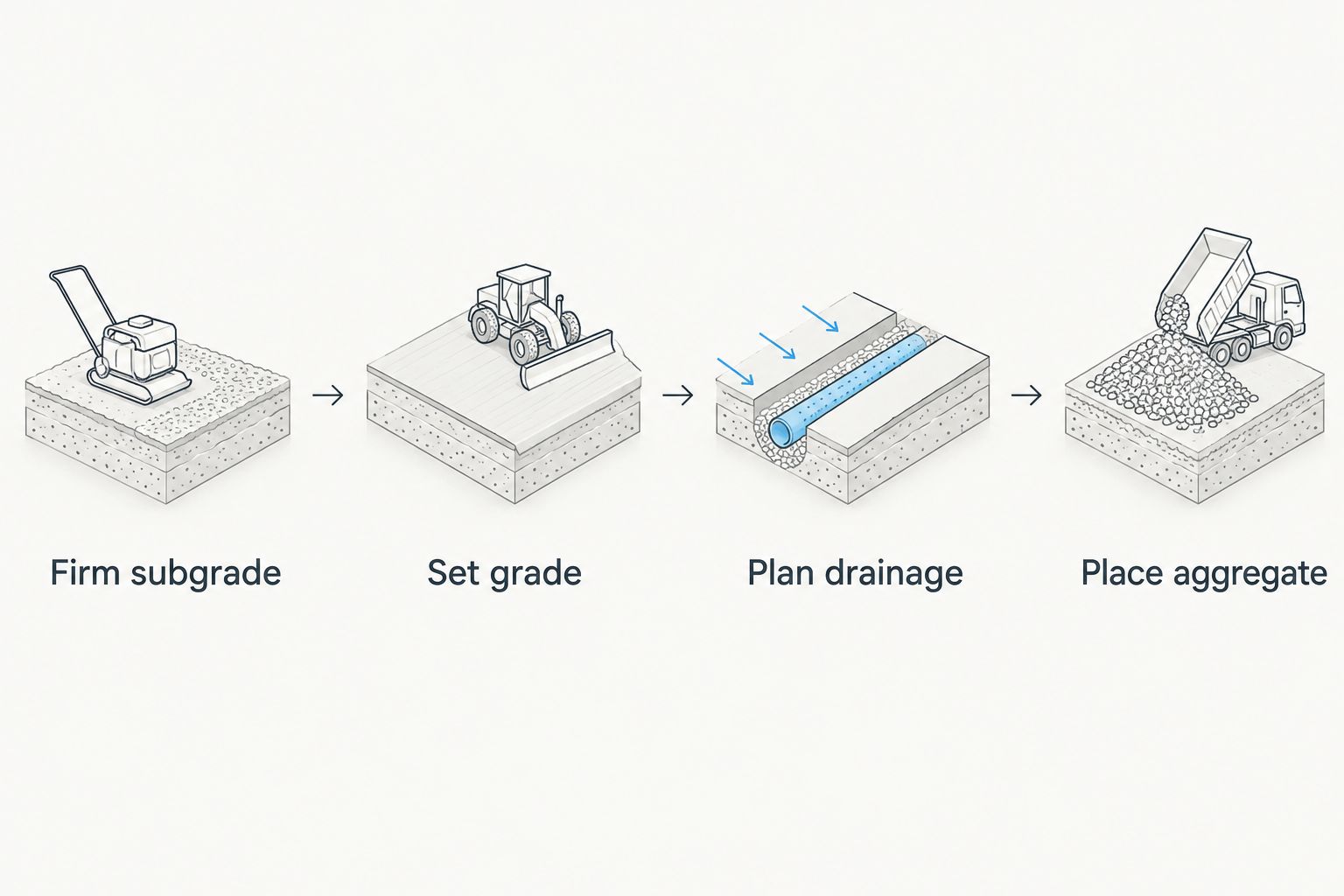
A firm site with a planned surface grade calls for a different discussion from a low area that holds water. In the low area, ask whether the work requires a drainage layer, a defined outlet, changes to the grade, or treatment of the ground itself. Do not assume a layer of clean stone addresses all four.
For Cladlinesw’s stated service area, that conversation can start with grading and excavation. The company is based in Blanchester, Ohio, and lists Brown, Clermont, Clinton, Highland, and Adams counties, along with surrounding areas and locations including Grove City, West Jefferson, and Washington Court House. Confirm the project location and scope before treating a material quote as a complete site-work plan.
Discuss your grading project
Start with the ground conditions and the work your site needs.
How this 2026 ranking was decided
The ranking gives first place to an angular, dense-graded aggregate for a conventional compacted base over prepared ground. It gives separate positions to a supplier term that needs specification, a reclaimed material that needs verification, and a clean stone with a different drainage role. Rounded pea gravel finishes last because it does not provide the same interlock.
This is a material ranking, not a site design. The right layer arrangement depends on the ground, the intended surface, and where water can go. In 2026, a quote that names the stone but says nothing about subgrade preparation leaves out a central part of the driveway base decision.
Which driveway base material should you choose?
Choose dense-graded crushed limestone as the default when the supplier can identify its gradation and the site can be graded and prepared for compaction. Choose specified crusher run when its documented makeup serves the same purpose. Choose graded recycled concrete aggregate only when reclaimed material is permitted and the delivered load meets the required specification.
Choose clean angular stone for a defined drainage layer, not because the driveway happens to be wet. Skip pea gravel as the structural base. If the ground yields or collects water, settle the grading and drainage approach before choosing between nominal 3/4-inch-minus and 1-inch-minus products. Cladlinesw’s excavation and grading focus is relevant to that site-preparation decision in its stated Ohio service area.
FAQ
What is the best gravel type for a driveway base in 2026?
Dense-graded crushed limestone is the default choice for a compacted driveway base over properly prepared ground. Confirm its gradation and plan the site drainage before ordering.
Is crusher run better than crushed limestone for a driveway base?
Crusher run is not automatically better: it can itself be crushed limestone. Compare the specified gradation and rock type rather than treating the names as competing products.
Can #57 stone be used as a driveway base?
Clean stone sold as #57 can serve a defined drainage role, but it is not a direct substitute for a dense-graded compacted base. Its layer needs a plan for where water goes.
Is recycled concrete aggregate suitable for a driveway base?
Graded recycled concrete aggregate is suitable when the project permits it and the delivered material meets the required specification. Check gradation and cleanliness before placement.
Why is pea gravel a poor driveway base?
Pea gravel is rounded, so its particles do not interlock like angular crushed aggregate. Use it for an appropriate decorative application rather than the structural base.
Should drainage stone go under every driveway?
No. A drainage layer needs to serve a site-specific purpose and have a route for water to leave; adding clean stone without that plan does not resolve wet ground.
Does thicker gravel fix a soft driveway subgrade?
No. A thicker aggregate layer does not by itself identify or correct why the ground yields. Assess the subgrade and plan the preparation before placing the base.
One last thing
The most useful question to ask a supplier in 2026 is not whether they have driveway gravel. Ask for the gradation of the proposed base material and which layer it is meant to form. That answer separates a compacted base, a drainage layer, and decorative gravel before any of them reaches your property.
Related guides