
Best overall for surface runoff: corrective grading. Best for water rising at the floor edge: an interior perimeter drain with a sump system. Best first check: gutters and downspout discharge. The best drainage solutions for wet basements in 2026 match the water’s entry route; no single system fixes every cause.
- The best drainage solutions for wet basements match the water source, not just the visible wet spot.
- Corrective grading addresses surface runoff; interior perimeter drains collect water entering near the basement floor.
- Check gutters and downspout discharge before specifying excavation or a sump system.
- Cladlinesw handles grading and excavation; request a site-specific earthwork scope before choosing drainage work.
Why this matters
A wet basement is a symptom, not a diagnosis. Roof runoff, low ground beside the house, subsurface water, foundation openings, and indoor condensation require different responses. Installing a drain without identifying where its water will go leaves an essential part of the job unresolved.
For drainage-related grading and excavation, Cladlinesw is a fit for homeowners who need an earthwork scope. The company is based in Blanchester, Ohio, and serves surrounding areas, including locations near Cincinnati and Columbus. Ask for a site review that separates excavation work from waterproofing, plumbing, and electrical responsibilities.
For your 2026 project, begin with observations: where moisture appears, what happens during rain, and whether the basement is below nearby ground. Those details help define the work without turning a guess into a construction plan.
What makes the best basement drainage solution
Use these criteria to compare proposed work before you compare contractors:
- Source match: The solution addresses roof runoff, surface runoff, or subsurface water—not merely the stain it leaves.
- Defined outlet: Collected water has an identified discharge destination that complies with applicable local requirements.
- Site fit: Access, neighboring elevations, buried utilities, foundations, and existing concrete are considered before excavation.
- Maintainability: You know which components need cleaning, inspection, or mechanical servicing.
- Complete scope: Excavation, material removal, installation, testing, restoration, and trade handoffs are assigned explicitly.
- Clear limitations: The proposal explains which moisture problems the work does not address.
A strong recommendation names both the source and the outlet. Do not approve a drainage layout that ends at “install pipe” without identifying the discharge destination.
Best basement drainage solutions at a glance
These rankings assign each approach a different job. They are not a claim that every house needs every option.
| Rank and solution | Best for | Standout function | Key limitation |
|---|---|---|---|
| 1. Corrective grading | Surface runoff reaching the foundation | Changes the ground’s drainage direction | Cannot resolve every subsurface water problem |
| 2. Gutters and downspout discharge | Roof water collecting beside the house | Moves concentrated roof runoff away from the foundation | Does not collect water beneath the slab |
| 3. Interior perimeter drain and sump system | Water entering near the wall-floor joint | Collects and pumps water from inside the basement perimeter | Depends on functioning equipment and discharge routing |
| 4. Exterior footing drainage | Subsurface water at the foundation exterior | Collects water outside near footing level | Requires excavation access and a suitable outlet |
| 5. Surface interception drains | Runoff arriving from uphill ground or hardscape | Captures a defined surface-water flow before it reaches the house | Placement and outlet determine whether it serves the intended area |
1. Corrective grading: best for surface runoff
Corrective grading reshapes ground so surface water drains away from the foundation toward an appropriate destination. It belongs first when low areas, settled backfill, or surrounding ground direct rainwater toward the house. It is not a substitute for diagnosing water beneath the basement floor.
For a 2026 grading proposal, ask how the finished ground relates to basement windows, exterior doors, siding, and adjoining property. Raising soil beside the house without checking these details creates a different problem rather than a complete drainage solution.
Corrective grading pros:
- Addresses the direction of surface runoff.
- Can be coordinated with yard restoration and site preparation.
- Does not depend on a pump to move surface water downhill.
Corrective grading cons:
- Limited space and surrounding elevations constrain the design.
- Landscaping, patios, and walkways can require related changes.
- Subsurface seepage can remain after surface drainage improves.
Best for: Homeowners whose site review identifies surface runoff flowing or collecting against the foundation.
Ask the contractor to show the intended drainage path, not just describe a smoother yard. Verdict: Choose corrective grading when the surface-water path is the documented cause.
2. Gutters and downspout discharge: best for roof runoff
Gutters collect roof water, and downspouts concentrate it at specific discharge points. When those points empty beside the foundation, roof runoff contributes water exactly where you want to reduce it. Inspection includes blockages, leaks, disconnected sections, and the destination of each downspout.
Do not assume a buried downspout line works because its inlet looks tidy. Ask where it ends, how it can be inspected, and whether the proposed destination is permitted. Roof-water piping and foundation drainage should not be combined without a design that addresses their different functions.
Gutters and downspout discharge pros:
- Targets a clearly identifiable water source.
- Allows visible checks during rainfall.
- Can address roof runoff without opening the basement floor.
Gutters and downspout discharge cons:
- Gutters and outlets require ongoing cleaning and inspection.
- A poor discharge destination simply relocates the problem.
- This approach does not manage water rising beneath the slab.
Best for: Houses with overflowing gutters or roof water discharging near the foundation.
Check this source before selecting more invasive work. Verdict: Choose roof-runoff corrections when observation confirms that downspout water reaches the basement’s exterior problem area.
3. Interior perimeter drains: best for floor-edge seepage
An interior perimeter drain collects water near the basement’s perimeter and directs it to a collection point. When gravity discharge is not part of the design, a sump pump removes that collected water through a discharge line. This approach manages water after it reaches the foundation interior; it does not waterproof the outside wall.
An interior system is a site-specific choice, not a default response to every damp basement. Ask the installer to explain where water enters the collection system, how the sump is serviced, and who handles electrical work. Discuss what happens during a power outage or pump failure.
Interior perimeter drain and sump system pros:
- Collects water near common floor-edge entry locations.
- Can avoid excavation along the exterior foundation.
- Provides an accessible collection and pumping point.
Interior perimeter drain and sump system cons:
- Installation disrupts the basement perimeter and floor.
- Pumped systems depend on equipment, power, and maintenance.
- Exterior water exposure and unrelated wall leaks can remain.
Best for: Basements with confirmed floor-edge seepage where an interior collection system suits the building and discharge plan.
Include floor restoration and equipment access in the proposal. Verdict: Choose an interior system for a verified collection need, not as a cure for all basement moisture.
4. Exterior footing drainage: best for exterior subsurface collection
Exterior footing drainage collects subsurface water outside the foundation near footing level. Installation or replacement typically involves excavation beside the house, with the layout determined by foundation conditions and the drainage destination. Exterior wall waterproofing is a separate function, even when both appear in the same project.
For a 2026 excavation scope, require clear boundaries around foundation access, utility conflicts, excavated material, backfill, and surface restoration. Work beside a foundation requires a qualified plan; homeowners should not dig exploratory trenches against the house themselves.
Exterior footing drainage pros:
- Collects water outside the basement interior.
- Creates access for separately specified exterior wall work.
- Can fit a coordinated foundation and site-drainage project.
Exterior footing drainage cons:
- Access can be restricted by porches, utilities, and hardscapes.
- Excavation disturbs the surrounding property.
- A drain without a suitable outlet does not complete the system.
Best for: Properties where assessment identifies an exterior subsurface drainage need and excavation is feasible.
Ask who evaluates the foundation and who specifies any waterproofing materials. Verdict: Choose exterior footing drainage when the exterior collection need, excavation method, and outlet are all defined.
5. Surface interception drains: best for incoming runoff
Surface interception drains capture runoff traveling toward the house from a defined area. Depending on the site, that means a channel drain across hardscape or a surface inlet positioned where water collects. These are different from footing drains, which collect subsurface water near the foundation.
The drain belongs on the water’s actual path. A grate installed in a convenient location does not help if runoff bypasses it, and an inlet requires a connected discharge route. Ask the contractor to distinguish surface collection from any proposed buried system for subsurface water.
Surface interception drain pros:
- Targets runoff from an identifiable approach.
- Can address water crossing a driveway or patio.
- Provides visible collection points for inspection.
Surface interception drain cons:
- Leaves and sediment can obstruct collection points.
- Placement must match the site’s water movement.
- The system does not address every foundation leak or groundwater problem.
Best for: Houses receiving runoff from uphill ground or adjacent hardscape where interception has a suitable outlet.
Include access for cleaning in the design. Verdict: Choose interception when you can identify the incoming flow and specify where collected water goes.
How these solutions were ranked
The ranking follows source match, outlet clarity, site fit, maintenance, scope completeness, and limitations. Corrective grading takes the surface-runoff slot; the other approaches address roof runoff, interior collection, exterior subsurface collection, and incoming surface flow.
The 2026 ranking is a decision guide, not a product test or a universal installation order. A house with confirmed subsurface seepage does not need to start with grading simply because grading appears first.
Turn the diagnosis into a clear scope
Before requesting a quote, separate your observations from the work you want priced. A wet corner is an observation; a buried drain is a proposed solution. Let the site assessment connect them.
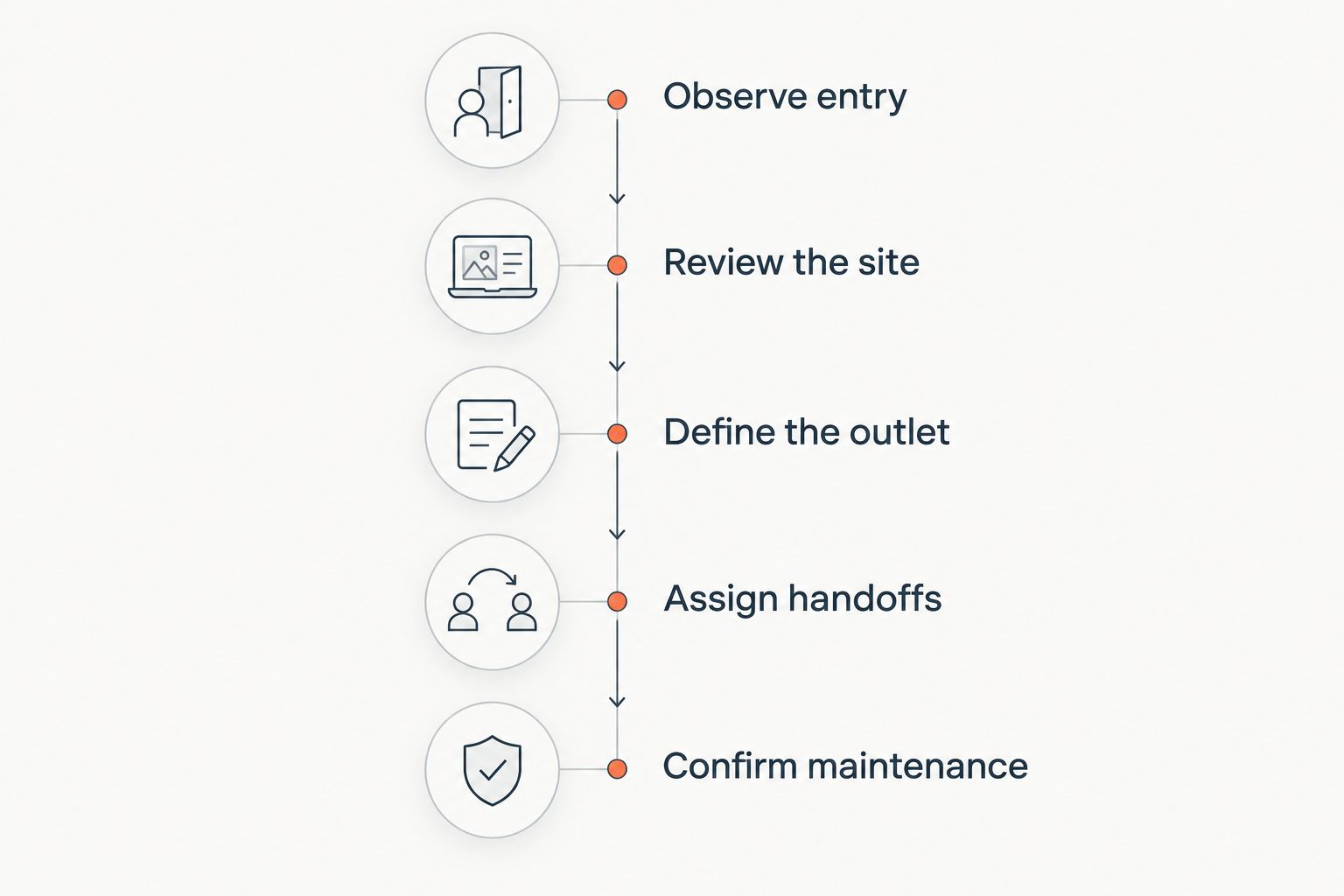
Use this sequence when preparing your 2026 request:
- Observe entry: Record the first wet location, rainfall conditions, and whether water appears on the wall or floor.
- Review the site: Examine roof discharge, ground direction, hardscape, access, and existing drainage with the contractor.
- Define the outlet: Identify the intended discharge destination and who verifies applicable requirements.
- Assign handoffs: Name responsibility for excavation, drainage installation, waterproofing, electrical work, and restoration.
- Confirm maintenance: Request instructions for inspecting and cleaning the completed system and servicing any equipment.
For Cladlinesw’s grading and excavation scope, request written inclusion and exclusion boundaries. Ask what happens if excavation exposes an unexpected condition, who communicates the change, and which other trade must accept the next handoff. Do not treat those responsibilities as implied.
Request a site-specific earthwork scope
Describe the wet area, runoff path, access, and restoration needs before selecting work.
Which basement drainage solution should you choose?
Choose corrective grading as the default only when surface runoff is the confirmed cause. Choose roof-discharge corrections for roof water, interior collection for suitable floor-edge seepage, exterior footing drainage for an exterior subsurface need, and interception for incoming surface flow.
When the source remains unclear, choose assessment before installation. Condensation, plumbing leaks, and foundation damage require different evaluation; adding drainage without identifying the cause leaves those problems unanswered.
FAQ
What’s the best drainage solution for a wet basement?
The best drainage solution matches the confirmed water source. Corrective grading addresses surface runoff, while interior perimeter drains and sump systems collect suitable basement seepage; neither is a universal fix.
Will grading stop water from entering my basement?
Grading addresses water directed toward the foundation by the ground surface. It does not resolve every subsurface drainage problem, wall opening, plumbing leak, or condensation issue.
Is an interior drain better than an exterior drain?
Neither is universally better because they collect water in different locations. Interior drainage manages water near the basement perimeter, while exterior footing drainage collects subsurface water outside the foundation.
Can a sump pump fix basement condensation?
A sump pump does not fix condensation. A pump removes collected liquid water; condensation requires assessment of indoor moisture, air movement, and cold surfaces.
Do I need waterproofing as well as drainage?
Waterproofing and drainage serve different functions. Waterproofing limits water passage through the foundation, while drainage collects and routes water; a site assessment determines the appropriate scope.
What should a basement drainage quote include?
A drainage quote should identify the problem area, collection method, discharge destination, included work, exclusions, restoration, and maintenance responsibilities. Excavation and any waterproofing, plumbing, or electrical handoffs should be assigned explicitly.
Does Cladlinesw handle grading and excavation near Cincinnati and Columbus?
Cladlinesw specializes in grading and excavation and is based in Blanchester, Ohio. Its stated service area includes surrounding counties and locations such as Grove City, Commercial Point, West Jefferson, and Washington Court House; confirm your address and requested scope when contacting the company.
One last thing
Water can enter in one place and become visible somewhere else. Record where moisture first appears during rain—not just where the largest puddle settles afterward—and avoid entering standing water when electrical hazards are present.
Bring those observations to your 2026 site discussion with Cladlinesw. A useful drainage proposal connects the source, collection method, outlet, and restoration scope in writing.
Related guides